Quick Answer
No. Pneumatic cylinders are not designed to operate with hydraulic oil or hydraulic pressure levels.
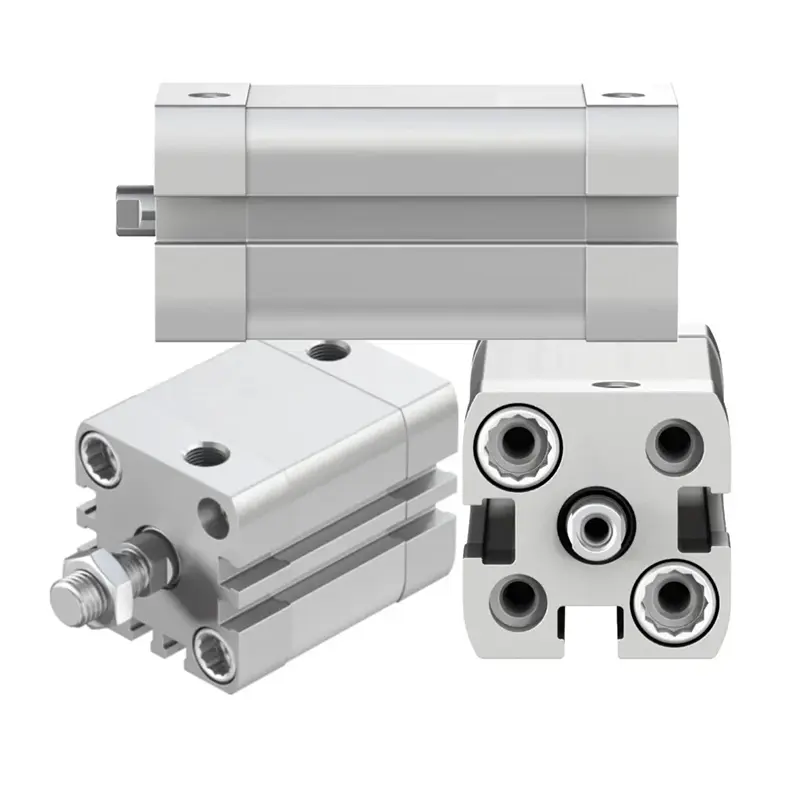
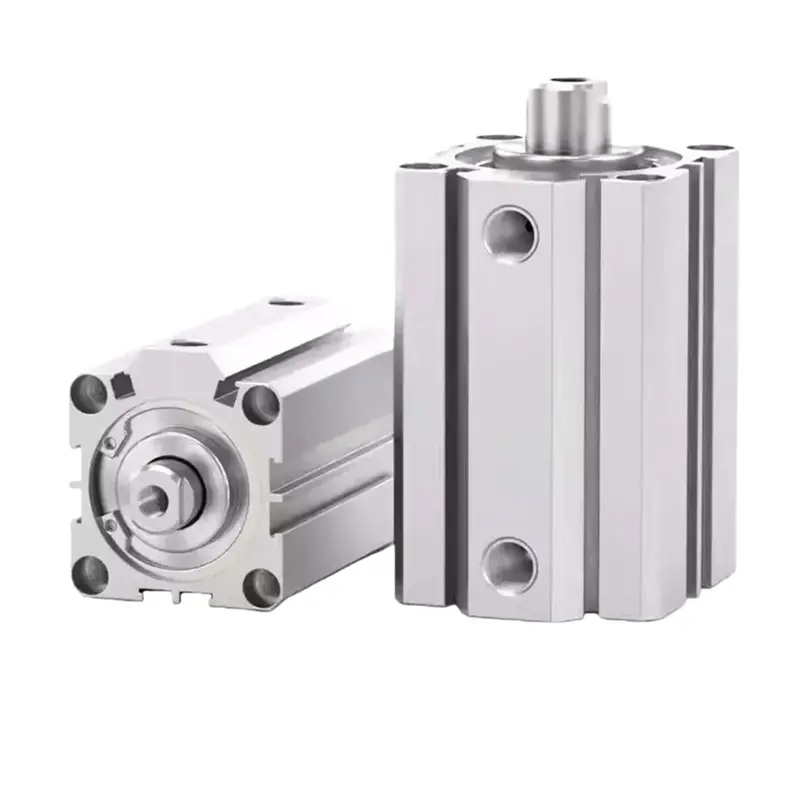
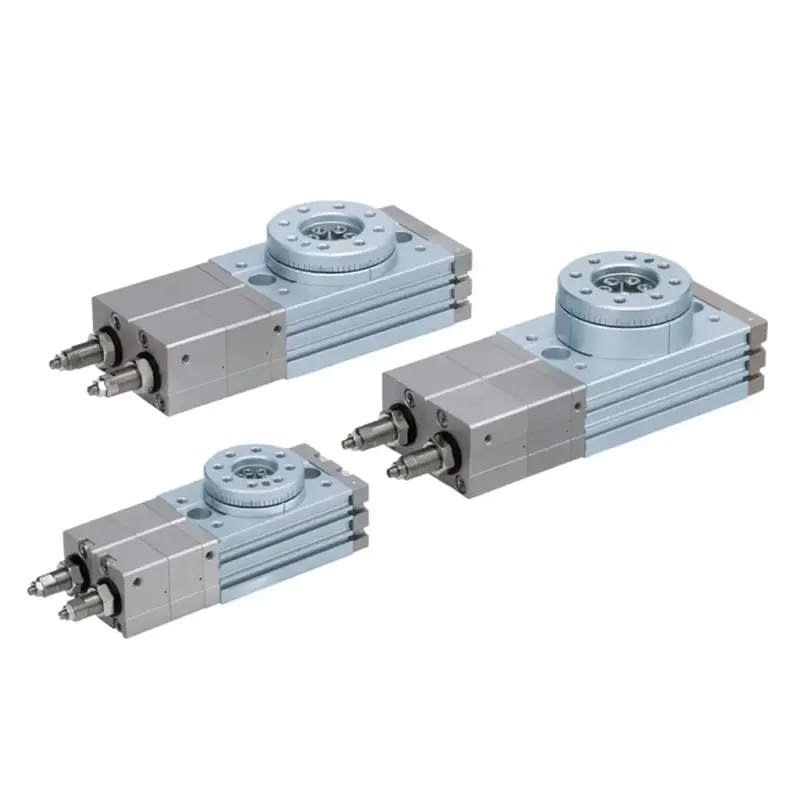
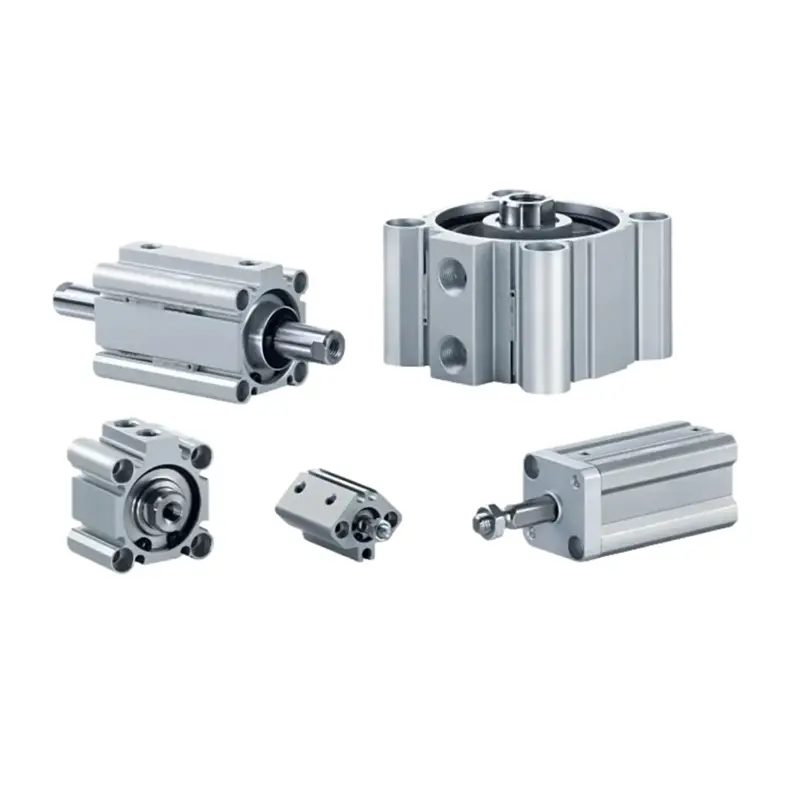
Although they look similar externally, pneumatic and hydraulic cylinders differ significantly in pressure rating, seal design, structural strength, and load capacity. Using hydraulic oil in a pneumatic cylinder can lead to seal failure, barrel rupture, oil leakage, and serious safety risks.
If higher force is required, the correct engineering solution is either:
- Use a proper hydraulic cylinder
- Increase pneumatic bore size
- Use an air-over-oil intensifier system
Pneumatic vs Hydraulic Cylinder: What’s the Real Difference?
At a glance, both actuators contain:
- Cylinder barrel
- Piston
- Piston rod
- End caps
- Sealing system
However, their working principles and design parameters are fundamentally different.
1️⃣ Working Medium
Pneumatic Cylinder
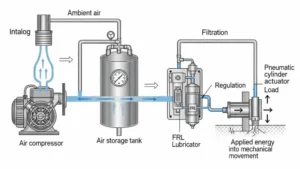
A pneumatic cylinder uses compressed air as the power source.
Typical characteristics:
- Operating pressure: 0.4–0.8 MPa (4–8 bar)
- Medium: compressible gas
- High speed operation
- Clean and low maintenance
- Common standard: ISO 15552 metric cylinders
Because air is compressible, motion is fast but force density is limited.
Hydraulic Cylinder
A hydraulic cylinder uses pressurized oil.
Typical characteristics:
- Operating pressure: 16–25 MPa, sometimes up to 35 MPa
- Medium: incompressible liquid
- Extremely high force output
- Excellent load holding capability
- Used in presses, construction equipment, heavy machinery
Hydraulic pressure is typically 25–40 times higher than pneumatic working pressure.
This alone makes direct substitution unsafe.
What Happens If You Put Oil in a Pneumatic Cylinder?
This is a common question from maintenance teams when hydraulic parts are temporarily unavailable.
From an engineering standpoint, several risks occur immediately:
1️⃣ Pressure Overload
Example:
- Standard pneumatic design pressure: 0.6 MPa
- Typical hydraulic system: 20 MPa
That is over 30 times higher internal stress.
Possible failure modes:
- Barrel deformation
- End cap separation
- Tie rod failure
- Sudden rupture
Hydraulic oil is incompressible. Pressure spikes transmit instantly.
A pneumatic cylinder wall thickness is not designed for such loads.
2️⃣ Seal Compatibility Problems
Pneumatic seals are optimized for:
- Low friction
- High speed
- Air lubrication
Hydraulic seals must:
- Resist high pressure extrusion
- Prevent micro-leakage
- Withstand oil chemistry
- Maintain static load holding
When oil is introduced into a pneumatic cylinder:
- Seal swelling may occur
- Lip seals may extrude
- Internal leakage increases
- Service life drops dramatically
Even if pressure is reduced, seal materials are not designed for continuous oil immersion unless specifically specified.
3️⃣ Structural Design Differences
Hydraulic cylinders typically feature:
- Thick steel barrel construction
- Welded or heavy tie-rod assembly
- High-pressure rod seals
- Designed safety factor under static load
Most pneumatic cylinders:
- Use aluminum barrels
- Prioritize lightweight design
- Are optimized for cyclic motion
- Are not engineered for long-term static load holding
These design philosophies are completely different.
Pressure Comparison: Pneumatic vs Hydraulic
| Parameter | Pneumatic Cylinder | Hydraulic Cylinder |
|---|---|---|
| Working Medium | Compressed Air | Hydraulic Oil |
| Typical Pressure | 0.6 MPa | 16–25 MPa |
| Force Density | Low–Medium | Very High |
| Load Holding | Limited | Excellent |
| Speed | High | Moderate |
| Cleanliness | Clean | Oil-based |
They are complementary technologies — not interchangeable ones.
Force Calculation Example (Engineering Perspective)
Force is calculated as:
F = P × A
Where:
P = pressure
A = piston area
Example 1 – Pneumatic
63 mm bore cylinder at 0.6 MPa:
Piston area ≈ 0.00312 m²
Force ≈ 0.6 × 10⁶ × 0.00312
≈ 1870 N
Example 2 – Hydraulic
40 mm bore cylinder at 16 MPa:
Area ≈ 0.00126 m²
Force ≈ 16 × 10⁶ × 0.00126
≈ 20,000 N
Hydraulics produce over 10× more force with a smaller bore.
This demonstrates why simply filling a pneumatic cylinder with oil is not a valid solution.
Is There Any Situation Where It Might Work?
In rare experimental cases:
- Oil pressure below 1 MPa
- Temporary testing
- Modified seal replacement
However:
- This voids manufacturer design assumptions
- Reliability cannot be guaranteed
- Safety compliance may be compromised
From a professional manufacturing standpoint, this approach is strongly discouraged.
Safer Alternatives to Increase Force
1️⃣ Use a Proper Hydraulic Cylinder
Best for:
- Pressing
- Heavy clamping
- Lifting
- Continuous load holding
This is the correct solution when force requirements exceed pneumatic limits.
2️⃣ Use an Air-Over-Oil System
An air-over-oil system combines pneumatic drive with hydraulic smoothness.
Typical characteristics:
- Pressure amplification ratio: 1:3 to 1:20
- Suitable for short stroke applications
- Cleaner than full hydraulic systems
- Reduced oil volume
Common in precision forming or clamping systems.
3️⃣ Increase Pneumatic Bore Size
Instead of increasing pressure, increase area.
If pressure remains 0.6 MPa:
- 50 mm bore → ~1178 N
- 80 mm bore → ~3016 N
Force increases significantly without changing system type.
This is often the simplest and safest upgrade path.
Engineering Selection Checklist
Before choosing between pneumatic and hydraulic actuation, evaluate:
- Required force (N or kN)
- Available pressure supply
- Stroke length
- Speed requirement
- Load holding time
- Installation space
- Environmental cleanliness
- Safety compliance standards
Correct actuator selection prevents long-term failure and downtime.
Manufacturer Engineering Perspective
From a manufacturing standpoint, pneumatic cylinders are designed with:
- Defined maximum working pressure
- Safety factor margins
- Specific seal materials for compressed air
- Fatigue resistance for cyclic motion
These parameters are validated for air systems — not for hydraulic oil environments.
Using a pneumatic cylinder hydraulically bypasses all original design safety assumptions.
FAQ
No. Even at reduced pressure, seal compatibility and structural limits make it unreliable and unsafe for long-term operation.
Possible outcomes include seal extrusion, end cap separation, barrel rupture, and sudden failure under load.
You can:
Increase bore diameter
Increase pressure within rated limits
Use mechanical leverage
Use an air booster system
Generally yes. Pneumatic systems are simpler, cleaner, and more cost-effective for light to medium-duty automation.
Final Conclusion
Pneumatic cylinders and hydraulic cylinders may look similar externally, but they are engineered for fundamentally different pressure ranges and structural loads.
Using a pneumatic cylinder as a hydraulic actuator is unsafe and not recommended.
The correct engineering solution is always to select the actuator type based on force requirement, pressure availability, and safety standards — rather than modifying components beyond their design intent.