
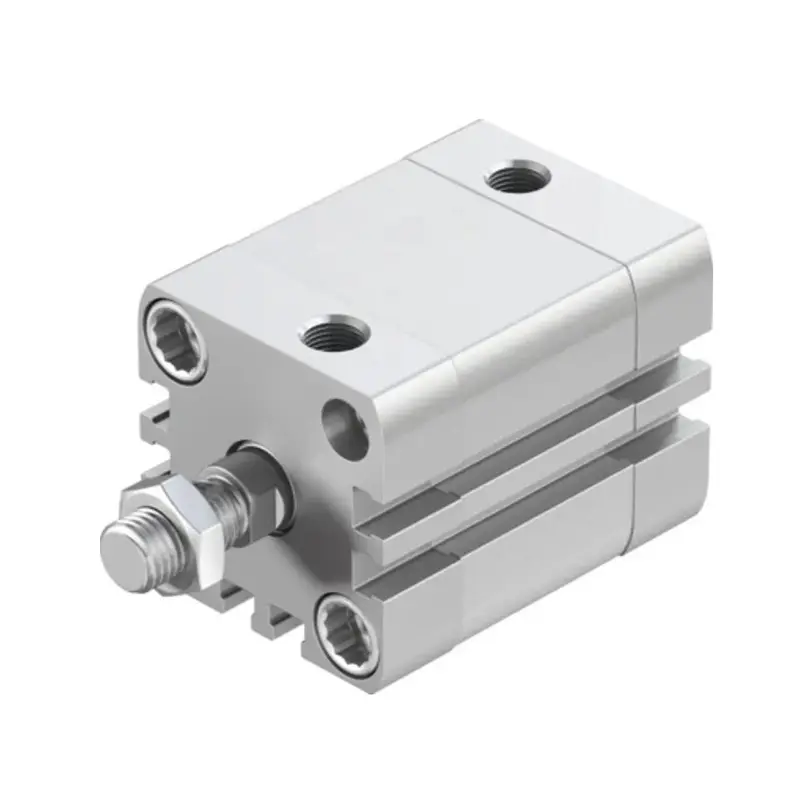
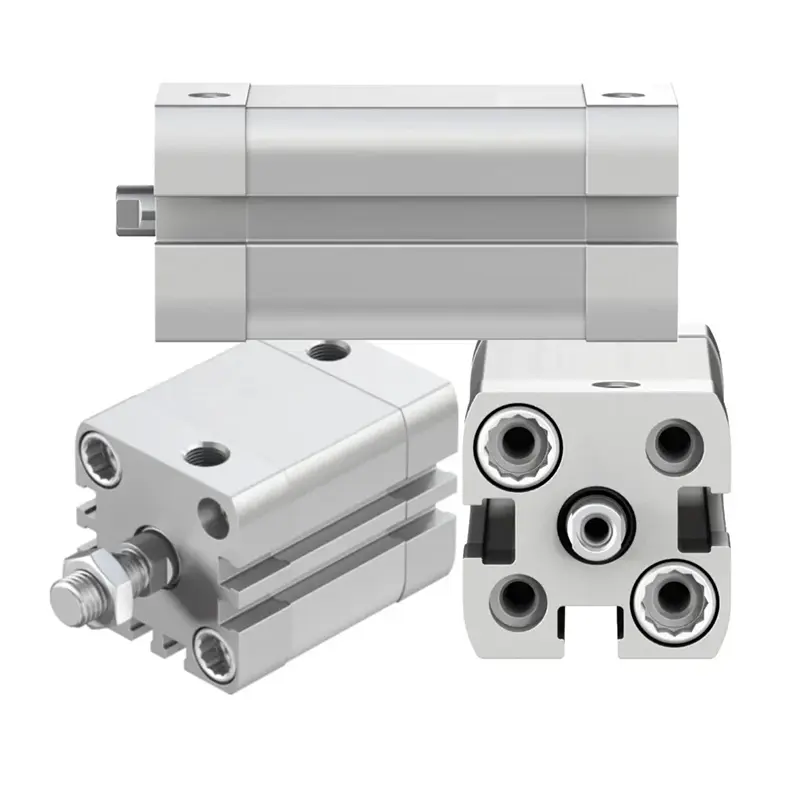
What Is an ISO 21287 Compact Cylinder?
An ISO 21287 cylinder is a standardized compact pneumatic actuator with reduced overall length compared to traditional ISO 15552 cylinders.
The ADN magnetic version features:
- Double acting structure
- Built-in piston magnet
- Sensor mounting slots on both sides
- Rubber buffer cushioning
- Square body aluminum profile
Compared with round body cylinders, the square body pneumatic cylinder provides:
- Better mounting rigidity
- Easier side sensor installation
- More compact machine layout
- Improved structural stability
This makes it ideal for space-restricted automation systems.
Key Features of ADN Magnetic Compact Pneumatic Cylinder
1. Compact Design with Strong Output
- Bore size range: 12mm – 125mm
- Short body length
- Optimized sealing system for stable force output
- Suitable for high-cycle applications
2. Integrated Magnetic Piston
- Compatible with standard magnetic proximity switches
- Non-contact position detection
- Simplifies automation control wiring
- Improves reliability in sensor-based systems
3. Durable and Reliable Construction
- Piston rod: Hard chrome plated #45 steel
- Optional stainless steel piston rod
- High-strength aluminum alloy cylinder body
- Maintenance-free rubber buffer cushioning
4. Wide Working Range
- Working pressure: 0.1 – 1.0 MPa
- Proof pressure: 1.5 MPa
- Ambient temperature: -5°C to 70°C
- Operating speed up to 500 mm/s
This double acting compact air cylinder delivers stable performance even under continuous operation.
Technical Specifications
| Parameter | Specification |
|---|---|
| Standard | ISO 21287 |
| Type | Double Acting (Standard) |
| Working Medium | Filtered Compressed Air |
| Cushioning | Rubber Buffer |
| Port Size | M5 (12–25mm) / G1/8 (32–100mm) / G1/4 (125mm) |
| Rod End | Female Thread / Male Thread |
Available Bore Sizes
12 / 16 / 20 / 25 / 32 / 40 / 50 / 63 / 80 / 100 / 125 mm
Custom stroke lengths are available upon request.
ISO 21287 Compact Cylinder vs ISO 15552 Cylinder
| Feature | ISO 21287 Compact Cylinder | ISO 15552 Standard Cylinder |
|---|---|---|
| Body Length | Short | Longer |
| Installation Space | Compact | Requires more space |
| Weight | Light | Heavier |
| Typical Application | Compact automation | Heavy-duty machinery |
| Sensor Installation | Direct slot mounting | Bracket required |
If your equipment has limited installation space, the ISO 21287 compact pneumatic cylinder is the better solution.
Typical Applications
The ADN magnetic compact cylinder is widely used in:
- Packaging machinery
- Automatic assembly lines
- Pick-and-place units
- Electronics manufacturing
- Food processing equipment
- Textile and light industry automation
Especially suitable for sensor-controlled, high-speed automation systems.
How to Select the Right Compact Pneumatic Cylinder
When choosing an ISO 21287 magnetic compact cylinder, consider:
1. Required Output Force
Force calculation:
F = P × A
Where P = working pressure
A = piston area
Ensure the cylinder provides sufficient force with a safety margin.
2. Stroke Length
Select stroke based on required movement distance plus buffer margin.
3. Installation Dimensions
Confirm mounting dimensions match ISO 21287 standard for easy replacement.
4. Environmental Conditions
For humid or corrosive environments, choose stainless steel piston rod option.
If you need assistance, our technical team can recommend the correct model based on your application.
Why Choose CHDAC ADN ISO 21287 Cylinder?
- Strict ISO 21287 dimensional compliance
- Compatible with international compact cylinder brands
- Stable sealing performance
- Reliable quality control
- OEM & private label support
- Bulk production capability
- Fast delivery for distributors and equipment manufacturers
CAD drawings and 3D files are available upon request.
We support machine builders, automation integrators, and pneumatic distributors worldwide.
FAQ
Yes. Since it follows ISO 21287 standard mounting dimensions, it can replace equivalent compact cylinders designed under the same standard.
The integrated magnet allows non-contact position sensing through external magnetic switches. This improves automation accuracy and reduces mechanical wear.
Rubber buffer provides fixed end-stroke shock absorption and requires no adjustment. Adjustable cushion allows fine tuning but increases structure complexity and cost.