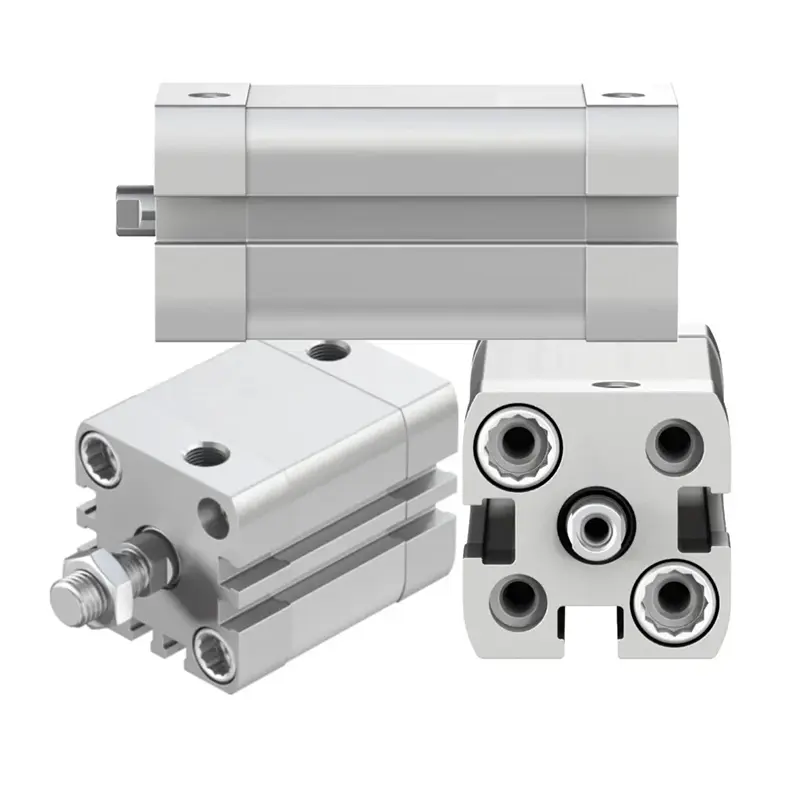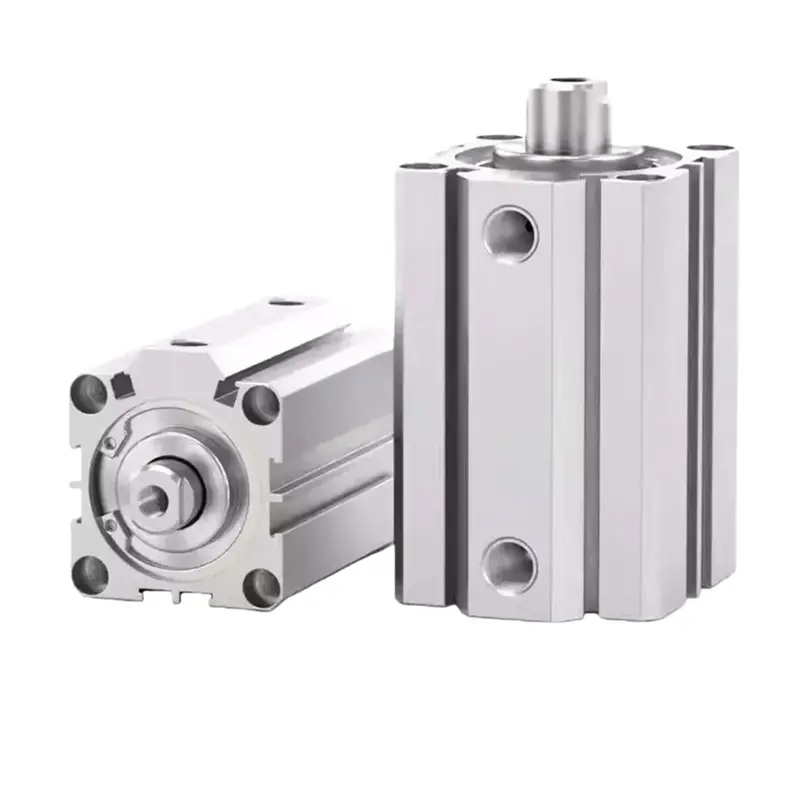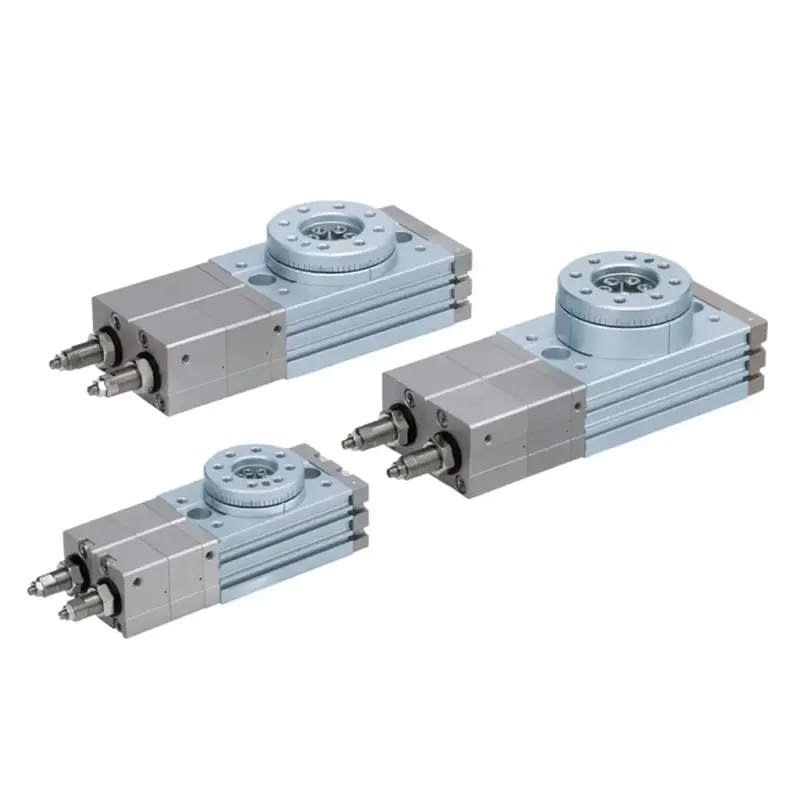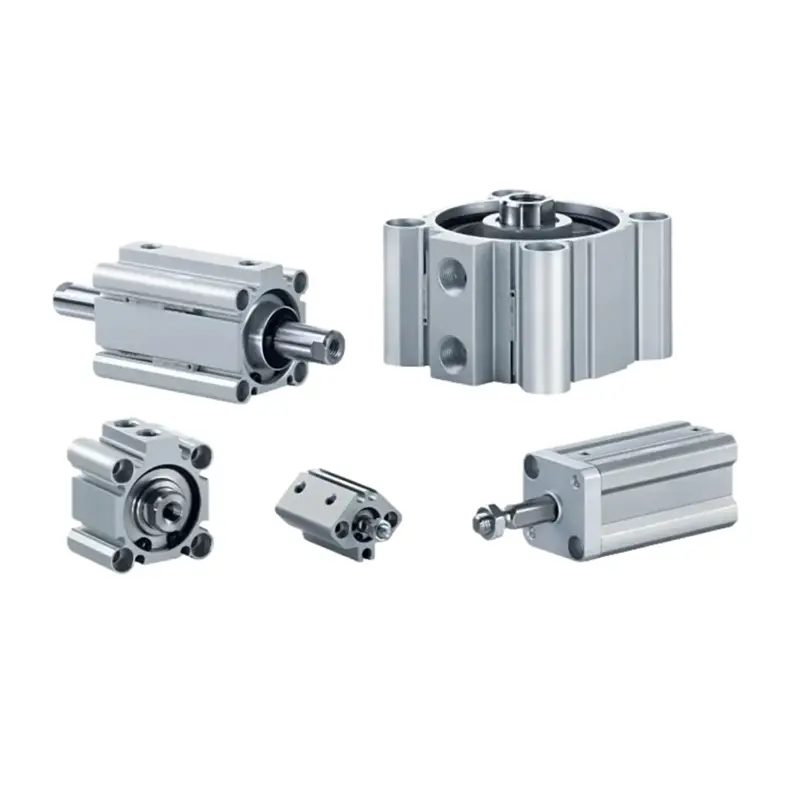
A Complete Engineering Guide for Industrial Automation
Determining the right type of pneumatic cylinder support is not just a minor mechanical specification, but it impacts stability, rod alignment, seal life, and even the overall reliability of a machine.
As a pneumatic component supplier to original equipment manufacturers and automation integrators, CHDAC is aware of the importance of ensuring the chosen mounting type matches application conditions in terms of load direction, stroke, constraint, and other dynamic factors. When creating this reference guide, important concepts are described, options are compared, and a selection process is introduced.
This guide explains:
- What pneumatic cylinder mounting types are
- The difference between fixed and pivot mounts
- How to choose the correct mounting configuration
- Engineering factors engineers must evaluate
- Common installation mistakes to avoid
What Are Pneumatic Cylinder Mounting Types?
A pneumatic cylinder mounting type refers to the mechanical interface used to attach the cylinder body to a machine frame or structure.
The mounting style determines:
- How force is transferred
- Whether angular movement is allowed
- How load stress is distributed
- How well alignment is maintained during motion
In practical motion control systems, misalignment and side loading are among the most common causes of actuator failure. Proper mounting selection prevents these issues at the design stage.
Main Pneumatic Cylinder Mounting Types
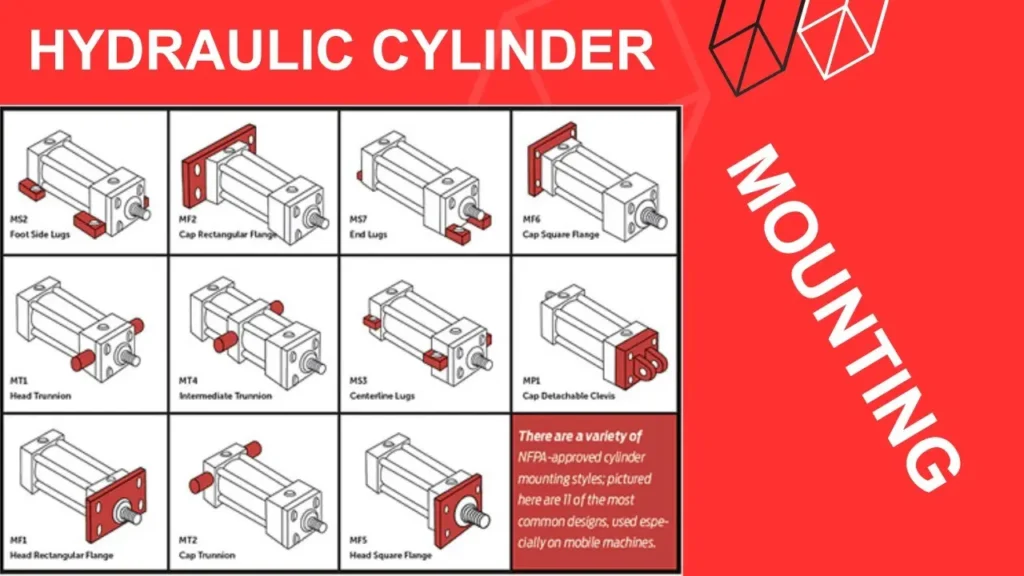
Pneumatic cylinder mounting types are generally divided into three categories:
1. Fixed Centerline Mounts
Fixed mounts are designed for applications where force is applied in a straight line and no angular movement occurs.
Common Fixed Mounting Types:
- Front flange mount
- Rear flange mount
- Foot mount
- Side lug mount
Best For:
- Linear push/pull motion
- Rigid machine frames
- High-force applications
- Well-aligned load paths
Advantages:
- High structural rigidity
- Simple installation
- Suitable for heavy loads
Limitations:
- Cannot compensate for misalignment
- Sensitive to side loads
- Increased rod stress if load path shifts
Fixed mounts are widely used in ISO standard profile cylinders such as those designed under ISO 15552.
2. Pivot Mounts
Pivot mounts allow angular movement during cylinder operation. These mounts reduce side loading by permitting natural motion alignment.
Common Pivot Mounting Types:
- Rear clevis mount
- Double clevis mount
- Trunnion mount (front, rear, or intermediate)
Best For:
- Arc or swing motion
- Linkage-driven mechanisms
- Robotic arms
- Long-stroke cylinders
Advantages:
- Reduces side load stress
- Improves seal life
- Compensates for minor alignment errors
Limitations:
- Slightly lower rigidity than fixed mounts
- Requires proper pivot pin sizing
- Additional mounting hardware needed
In long-stroke applications, trunnion mounting is often preferred because it reduces bending moment on the piston rod.
3. Special or Compact Mounting Configurations
In space-constrained machinery, custom mounting configurations may be required:
- Front pivot brackets
- Compact body mounts
- Integrated mounting plates
These are common in collaborative robotics, packaging machinery, and modular automation systems.
Fixed vs Pivot Mounts: Engineering Comparison
| Feature | Fixed Mount | Pivot Mount |
| Angular Movement | No | Yes |
| Structural Rigidity | High | Moderate |
| Side Load Tolerance | Low | High |
| Installation Complexity | Simple | Moderate |
| Best Application | Straight push/pull | Arc or swing motion |
Step-by-Step Guide to Selecting the Right Mounting Type
Step 1: Analyze Load Direction
- Pure linear force → Fixed mount
- Angular or rotating motion → Pivot mount
- Offset load or linkage mechanism → Clevis or trunnion
If the load path is not perfectly aligned with the cylinder centerline, avoid rigid foot mounting.
Step 2: Evaluate Stroke Length
Longer strokes increase rod deflection risk.
For long-stroke cylinders:
- Prefer pivot mounting
- Add external guides for heavy loads
- Check rod buckling safety factor
For vertical installations, verify that mounting strength and rod stability are sufficient.
Step 3: Calculate Required Force
Correct formula:
Force (N) = Pressure (MPa) × Piston Area (mm²) × 10⁻³
Always include:
- Friction losses
- Load inertia
- Safety factor (typically 1.3–1.5 in industrial automation)
Mounting hardware must withstand the full reaction force without deformation.
Step 4: Consider Installation Space
Compact equipment may require:
- Front flange mounting
- Side mounting
- Compact ISO cylinders (e.g., ISO 6432 type designs)
Space constraints often influence mounting selection more than force requirements.
Common Mounting Mistakes in Industrial Applications
1. Using Foot Mount in Pivoting Motion
This creates continuous side load and accelerates seal wear.
2. Ignoring Rod Buckling in Long Stroke
Long unsupported strokes can cause rod deflection.
3. Undersized Mounting Bolts
Insufficient bolt strength reduces structural stability.
4. Poor Alignment During Installation
Even small angular misalignment increases friction and reduces efficiency.
In high-cycle automation systems, these errors significantly shorten actuator lifespan.
Application Examples
| Application | Recommended Mounting Type |
| Packaging pusher | Front flange |
| Robotic arm linkage | Rear clevis |
| Conveyor stopper | Foot mount |
| Vertical lifting | Rigid flange + guide |
| Heavy swing mechanism | Trunnion mount |
How CHDAC Supports OEM Mounting Selection
At CHDAC, we support equipment manufacturers and automation integrators with:
- ISO-standard cylinder configurations
- Multiple mounting accessories
- Custom bracket design
- Load and stress calculation support
- Application-specific engineering consultation
If you are unsure which pneumatic cylinder mounting type fits your project, provide:
- Bore size
- Stroke length
- Operating pressure
- Load mass
- Installation drawing
Our engineering team can recommend a suitable configuration and mounting solution.
FAQ
Incorrect mounting can cause side load stress, rod bending, seal damage, reduced accuracy, and shortened cylinder life.
Mounting type does not change theoretical force output. However, improper mounting reduces effective force due to friction and misalignment.
Trunnion mounts are ideal for pivoting applications and long-stroke cylinders where bending moment needs to be minimized.
Many profile cylinders follow ISO 15552, but compatibility should always be verified with the manufacturer.
Final Thoughts
Choosing the correct pneumatic cylinder mounting type is a critical design decision in industrial automation.
Fixed mounts offer rigidity and strength for straight-line force applications. Pivot mounts provide flexibility and reduce side loading in dynamic systems.
Proper mounting selection:
- Extends cylinder lifespan
- Improves motion accuracy
- Reduces maintenance costs
- Enhances overall machine reliability
Mounting is not just an accessory — it is a structural component of motion control design.