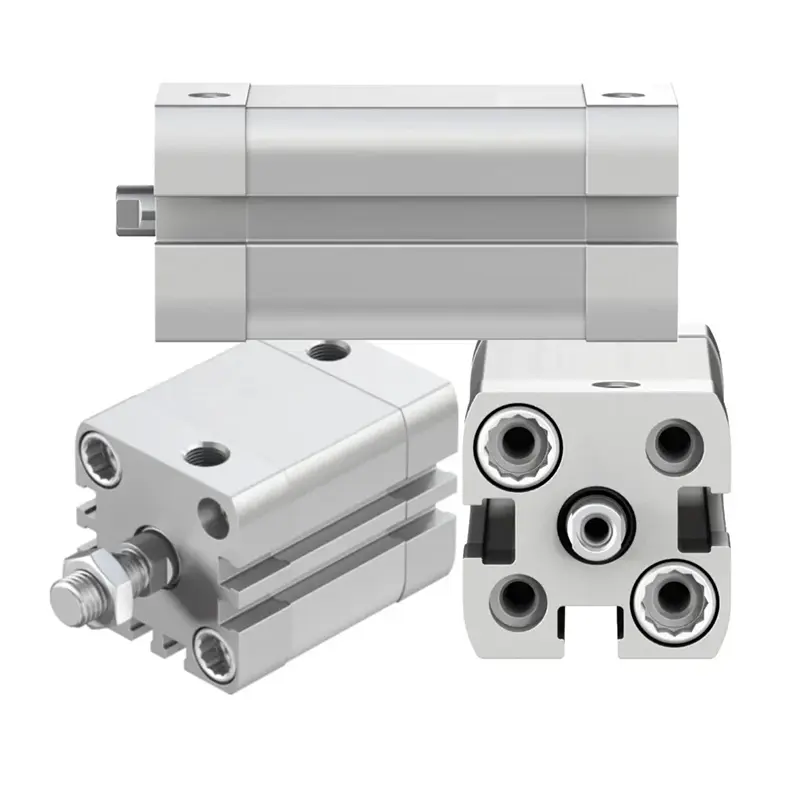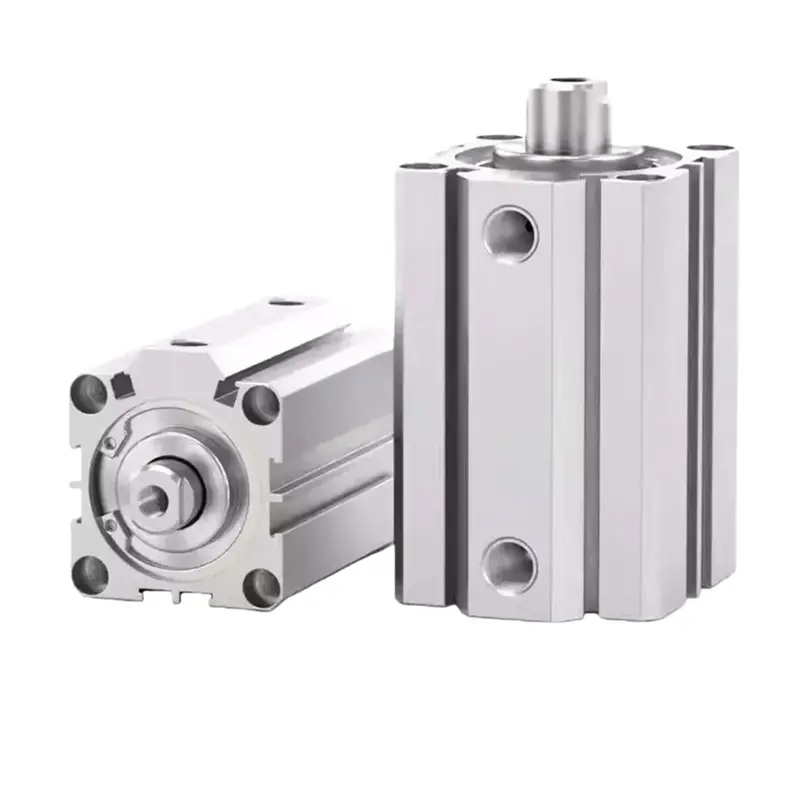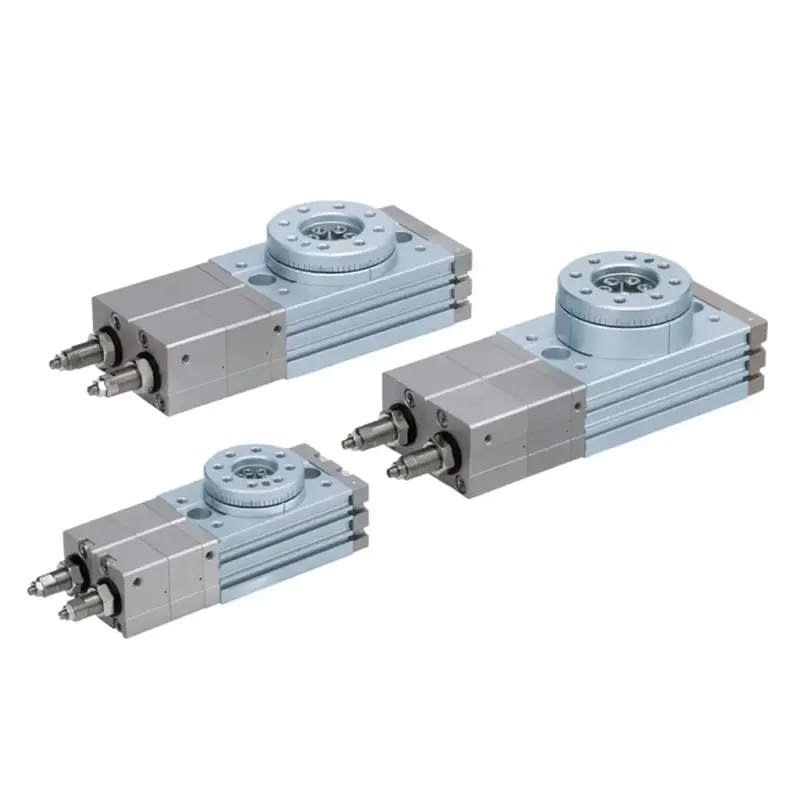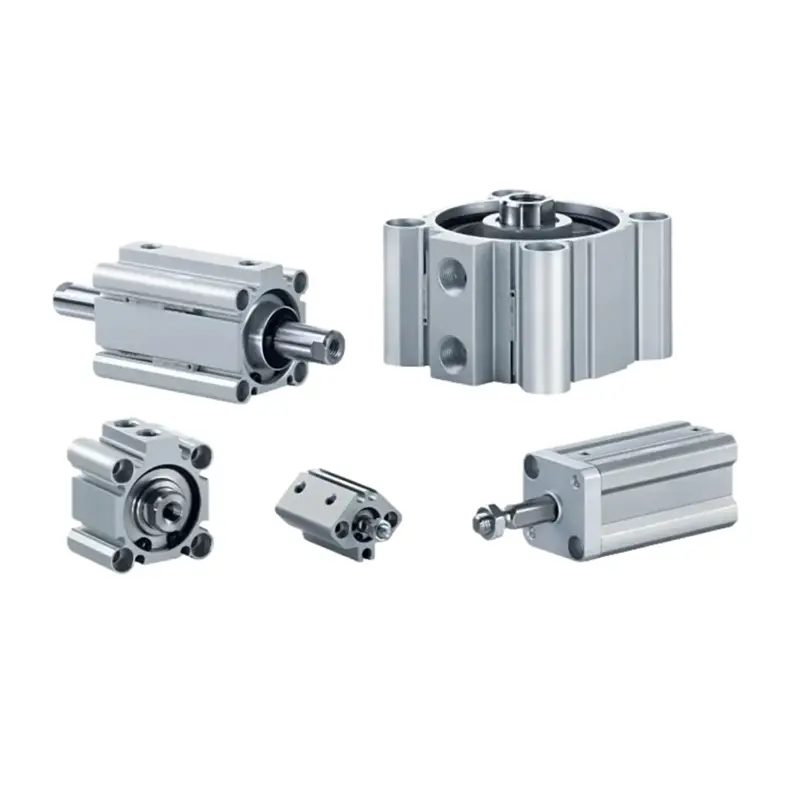
It is essential to ensure that the diameter of the air cylinder’s bore is measured well when making the necessary choices while replacing and maintaining pneumatic cylinders that are used within industries.
For example, in real-world applications like replacing worn-out cylinders on packaging systems, upgrading older equipment, or finding the correct OEM-spec replacement cylinders, even a marginal error in measuring the bore of cylinders can lead to inadequate thrust, leaks, instability, or premature seal failures. For various industries, bore measurement is critical to the efficiency, reliability, or potential downtime of equipment and systems.
This guide aims to help readers understand the meaning of a cylinder bore, the importance of properly measuring it, and how to do it properly using tried and tested techniques from the field of Pneumatic Engineering and maintenance in industry.
What Is the Cylinder Bore in an Air Cylinder?
The cylinder bore is the internal diameter of the cylinder tube in which the piston reciprocates. In a pneumatic cylinder, compressed air acts on the piston surface area defined by this bore to generate linear force.
From an engineering perspective, the cylinder bore is the primary dimensional parameter used to calculate theoretical force output and to define piston fit, seal geometry, and tube tolerance.
The bore diameter directly affects:
- Output force (F = P × A = P × π × D² / 4)
- Air consumption per stroke
- Acceleration and response speed
- Load capacity and motion stability
For example, doubling the bore diameter increases the piston area—and therefore theoretical output force—by four times. This nonlinear relationship is a core principle in pneumatic system design and is reflected in international standards such as ISO 15552.
Why Accurate Bore Measurement Matters
In industrial practice, accurate bore measurement is critical in scenarios such as:
- Replacing an existing air cylinder
- Ordering seal kits or internal spare parts
- Reverse-engineering OEM or discontinued equipment
- Troubleshooting force loss, air leakage, or inconsistent motion
- Verifying compliance with ISO or NFPA standards
Using an incorrect bore size may lead to:
- Insufficient thrust under working pressure
- Excessive compressed air consumption
- Seal mismatch and accelerated wear
- Reduced service life and unexpected downtime
Leading pneumatic manufacturers consistently emphasize that dimensional accuracy is one of the most common root causes of pneumatic system inefficiency and failure.
Tools Required to Measure an Air Cylinder Bore
Before measurement, ensure the air cylinder is fully depressurized, disconnected from the pneumatic system, and safely disassembled if required.
Common measurement tools include:
- Vernier caliper – suitable for rough field checks
- Digital caliper – improved accuracy for maintenance work
- Inside micrometer – recommended for precision measurement
- Bore gauge – industrial-grade accuracy for production and overhaul
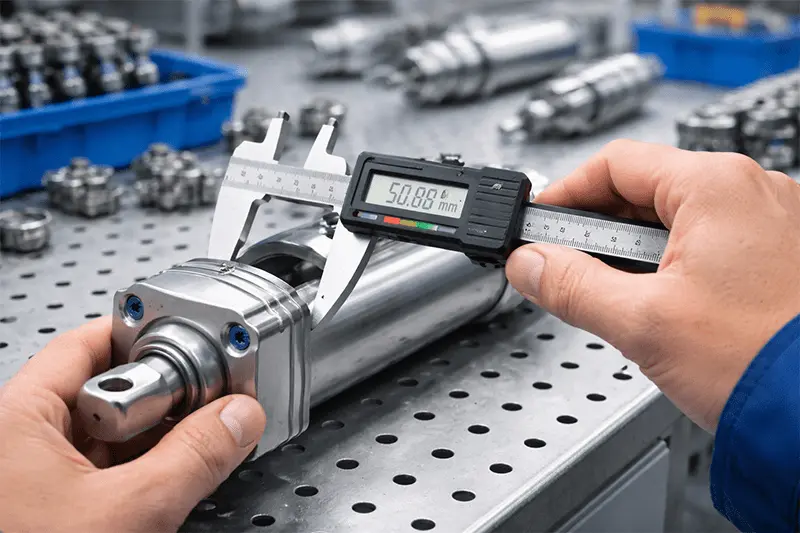
Method 1: Measuring the Bore with the Cylinder Disassembled (Recommended)
This is the most accurate and reliable method and is standard practice in manufacturing plants and maintenance workshops.
Step-by-Step Procedure
- Remove end caps
Disassemble the air cylinder and extract the piston and rod assembly. - Clean the internal surface
Remove oil, debris, and residue to prevent false readings. - Measure the internal diameter
- Insert a bore gauge or inside micrometer into the cylinder tube
- Measure at the front, middle, and rear positions
- Rotate the tool slightly at each position to detect ovality
- Record the smallest measured value
The minimum diameter represents the effective bore size used for seal and piston fitting.
Best Practice Tip:
For industrial cylinders above 40 mm bore, measurements should be taken at a minimum of three axial positions and two angular directions. Standards such as ISO 286 recommend checking roundness and straightness to properly assess bore tolerance.
Method 2: Measuring Bore via Piston Diameter (Indirect Method)
When full disassembly is not possible, the bore can be estimated indirectly by measuring the piston.
Steps
- Remove the piston rod and piston assembly
- Measure the piston outer diameter
- Add seal clearance (typically 0.1–0.3 mm, depending on bore size)
⚠️ Important Note:
This method is suitable only for preliminary identification or emergency replacement. It should not be used for seal manufacturing or precision matching, as seal compression ratios are highly sensitive to bore tolerance.
Method 3: Identifying Bore Size from Model Codes or Standards
Most standard pneumatic cylinders follow international dimensional specifications, including:
- ISO 15552 – Standard profile cylinders (metric)
- ISO 6432 – Mini cylinders
- NFPA – North American standard cylinders
Typical ISO bore sizes include:
- 12 mm, 16 mm, 20 mm
- 25 mm, 32 mm, 40 mm
- 50 mm, 63 mm, 80 mm, 100 mm
When replacing cylinders across brands, matching the bore size alone is not sufficient. Mounting dimensions, stroke length, cushioning type, and seal profiles must also comply with the same standard—especially when sourcing ISO 15552-compatible alternatives.
Common Bore Measurement Errors Checklist
- ❌ Measuring with air pressure applied
- ❌ Using worn or uncalibrated measuring tools
- ❌ Measuring only one position along the tube
- ❌ Confusing piston diameter with bore diameter
- ❌ Ignoring thermal expansion in high-temperature or high-duty applications
Industrial maintenance studies consistently show that dimensional measurement errors are a leading cause of pneumatic system inefficiency.
Bore Size vs. Air Cylinder Performance
| Bore Diameter | Typical Applications |
|---|---|
| Small bore (≤25 mm) | Electronics, light automation |
| Medium bore (32–63 mm) | Packaging machines, assembly lines |
| Large bore (≥80 mm) | Heavy-duty clamping, presses, material handling |
Larger bores provide higher output force but significantly increase air consumption. Optimal bore selection requires balancing mechanical load requirements with energy efficiency—a key principle in modern Industry 4.0 pneumatic design.
What to Do After Measuring the Bore
Once the bore diameter is accurately confirmed, engineers and procurement teams can:
- Calculate actual thrust under working pressure
- Select compatible seal kits and spare parts
- Cross-reference ISO-standard cylinders across different manufacturers
- Identify cost-effective OEM alternatives without redesigning the system
For equipment manufacturers and maintenance teams, accurate bore measurement is often the first step in sourcing reliable replacement air cylinders while minimizing downtime.
As a pneumatic component manufacturer, CHDAC supplies ISO-standard air cylinders, seal-compatible replacements, and customized pneumatic solutions. Accurate bore data allows CHDAC engineers to support cross-brand replacement, non-standard customization, and long-term maintenance planning for industrial customers worldwide.
FAQ
1. Is cylinder bore the same as piston diameter?
Not exactly. The piston diameter is slightly smaller to allow for seals and smooth movement. The bore is the internal diameter of the cylinder tube.
2. Can I measure the bore without disassembling the air cylinder?
Only indirectly. Measuring the piston or checking the model code can help identify the bore size, but direct internal measurement is always more accurate.
3. What tolerance is acceptable for air cylinder bore measurement?
Typical industrial tolerances range from ±0.02 mm to ±0.05 mm, depending on bore size and applicable standards.
4. Does bore size affect air consumption?
Yes. Larger bore cylinders consume more compressed air per stroke, which directly impacts operating cost and system efficiency.
5. How often should bore measurement be checked?
During major overhauls, seal replacement, or when performance degradation such as force loss or air leakage is observed.
Final Thoughts
Understanding how to measure the air cylinder bore diameter is a core skill in pneumatic system design, maintenance, and replacement sourcing. Whether you are maintaining existing equipment, replacing worn components, or selecting ISO-standard alternatives, precise bore measurement ensures reliable performance, energy efficiency, and long service life.
For industrial automation professionals, mastering this seemingly simple measurement can prevent costly downtime and improve overall system confidence.